
The Age-Smart Running Series

Running After 40+

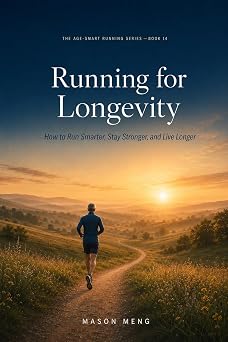
Running for Longevity: How to Run Smarter, Stay Stronger, and Add Healthy Years to Your Life (The Age-Smart Running Series Book 6)

Is running helping you live longer—or slowly wearing your body down?One week, you hear that running can add years to your life. The next, someone warns you about damaged knees, overtraining, or the risks of doing too much.You may feel stronger and clearer after running—but recovery takes longer than it used to. So the question remains:Are you building lifelong health, or accumulating damage?Decades of research suggest that running is one of the most powerful tools available for supporting long-term health and longevity. But the benefits depend on how you train, how well you recover, and whether your running is supported by strength, mobility, sleep, and nutrition.Running for Longevity provides an evidence-informed framework for runners who want to remain active, capable, and healthy for decades to come.This is not a race-training manual or a general wellness book with a few running tips. It is a practical guide to building a sustainable running life—one that supports your heart, muscles, joints, metabolism, balance, and overall resilience as you age.Inside this book, you will learn:What major longevity studies reveal about running and life expectancyHow your cardiovascular, musculoskeletal, and metabolic systems change with ageWhy moderate running volumes may provide most of the longevity benefitsHow to assess your current fitness, recovery capacity, and injury riskHow to structure intensity, weekly volume, and running frequency for long-term healthHow to combine running with strength training—without needing a gymWhich mobility and balance exercises become increasingly important with ageHow to recognize early warning signs before they develop into injuriesHow sleep, nutrition, and recovery turn training into lasting adaptationHow to adjust your running through career changes, family demands, health events, and other life transitionsHow to follow a complete multi-week plan integrating running, strength, mobility, and recoveryThis is a book about playing the long game.You do not need to run faster, farther, or harder every year. You need a system that helps you keep running—strong, confident, and healthy—for as long as possible.When practiced intelligently, running may be one of the best investments you can make in your future health.Running for Longevity shows you how to make every mile count.
Uncategorized

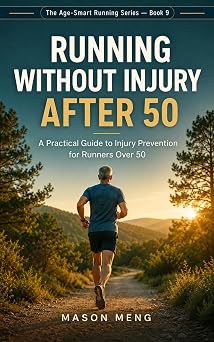
Running Without Injury After 50: A Practical Guide to Injury Prevention for Runners Over 50 (The Age-Smart Running Series Book 5)

Keep running without the constant anxiety of injury.If you are over 50 and love to run—or want to start—you have probably noticed that your body does not recover the way it used to.Aches that once disappeared overnight now linger. The line between a good run and an injury feels thinner than it once did. Maybe you have had a close call. Maybe you have already stopped running because it no longer felt worth the risk.Running Without Injury After 50 is not a training plan for setting personal records. It is a complete injury-prevention system designed for a body that has changed—and that will continue to change.In this book, you will learn:What actually changes in your muscles, tendons, and joints after 50—and what those changes mean for the way you runHow to assess your personal injury risk honestly, without fear or self-criticismThe five injury patterns that affect older runners most often—and how to recognize them earlyWhy most of your running should feel easy, and how to structure volume and intensity for long-term consistencyA practical strength program targeting the muscles that help prevent injuries—without requiring a gym membershipMobility exercises that address the specific restrictions that can lead to compensation and painHow recovery, footwear, nutrition, sleep, and stress all influence your injury riskA complete 12-week plan with starting levels for beginners, returning runners, and experienced runnersHow to return to running safely after an injury or a long breakPractical templates, worksheets, and quick-reference guidesThis book bridges the gap between “I want to keep running” and “I know how to keep running.”No gimmicks. No unrealistic promises. Just clear, practical guidance—and an honest understanding of what your body needs to keep running for years to come.

Uncategorized

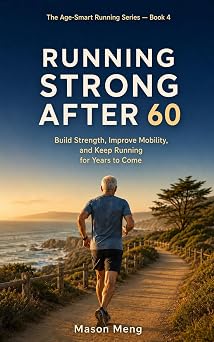
Running Strong After 60: Build Strength, Improve Mobility, and Keep Running for Years to Come (The Age-Smart Running Series Book 4)

You can be stronger at 60 than you were at 50.If you are a runner over 60, you may have noticed slower recovery, stiffer joints, or that your old training methods no longer work as well. But getting older does not mean giving up running or accepting inevitable decline.Running Strong After 60 is a practical, evidence-informed guide designed to help older runners build strength, improve mobility, reduce injury risk, and continue running confidently into their 60s, 70s, and beyond.Inside this book, you will discover:What actually changes after 60—and which abilities you can still maintain and improveA practical self-assessment covering mobility, strength, balance, and running readinessSix foundational strength exercises with clear, progressive variationsA simple 10-minute daily mobility routine for the areas older runners need mostAn integrated 8-week training plan combining running, strength, mobility, and recoveryBasic and advanced training tracks for different experience and fitness levelsInjury-prevention strategies, early warning signs, the 48-hour rule, and weekly self-checksSleep, recovery, and nutrition fundamentals adapted for older athletesLong-term strategies for continuing to run well into your 70s and 80sThis is not a book about slowing down. It is about training differently—so you can remain strong, capable, and active for years to come.Whether you want to maintain your current fitness, return to running after time away, or rebuild confidence in your body, this book gives you a realistic framework for moving forward safely.Your age may change how you train. It does not have to decide when you stop.Written for recreational runners aged 60 and older. This book provides general educational information and does not replace individualized medical advice, diagnosis, or treatment.

Scroll to Top